
Begin with seating and controls
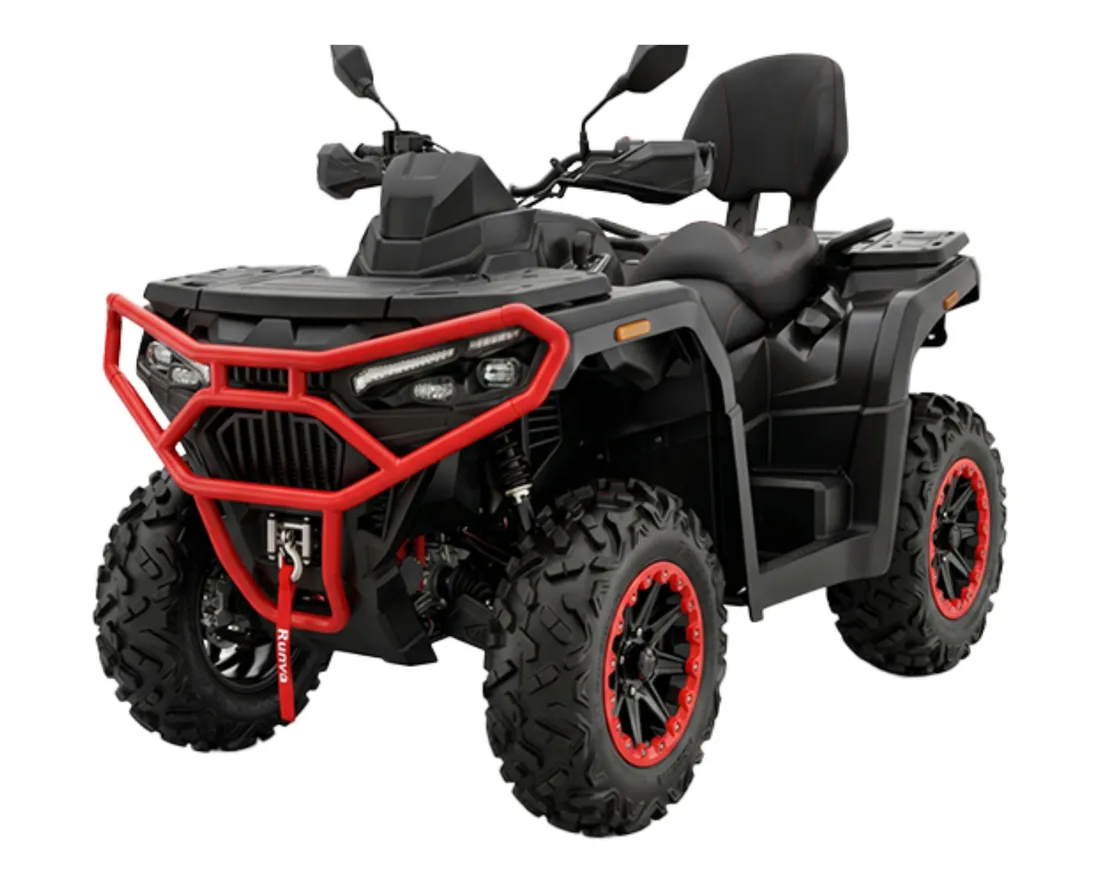
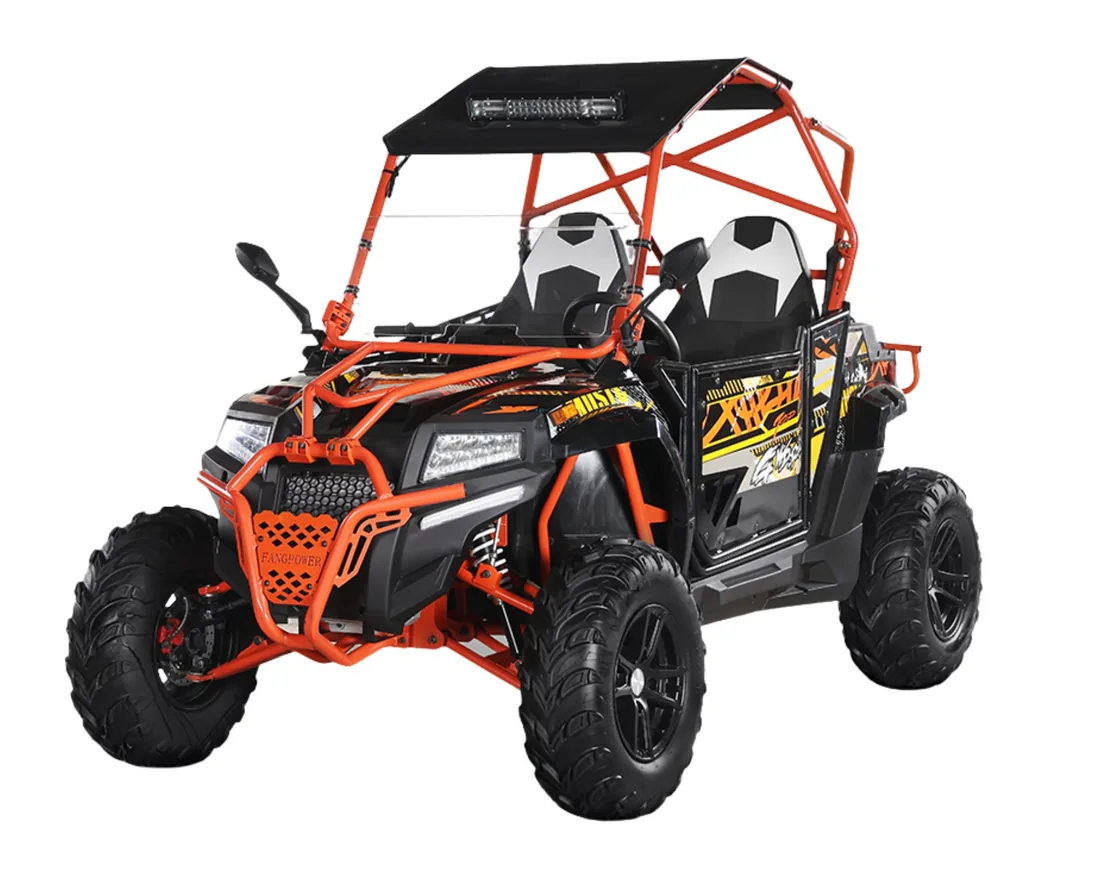
The KRUX family follows the straddle-seat ATV format. The rider sits over the vehicle and uses handlebar controls. PREDATOR and FARMER use a steering-wheel, side-by-side layout, which creates a different seating and interior arrangement. Those visible distinctions are useful, but a photograph does not confirm approved occupancy, load limits or the equipment included with a particular version. A long saddle should not be treated as proof of passenger approval. Equally, a UTV body shape should not be treated as proof of a particular carrying capacity. Compare the layout first, then request the exact occupancy and equipment information for the model under consideration.
Check the actual drivetrain, not just the category
A common shortcut is to assume every utility-looking vehicle has four-wheel drive. The FX400 PREDATOR information in the current FANGPOWER range instead describes 4×2 shaft drive, CVT transmission with F-N-R positions, and a liquid-cooled four-stroke single-cylinder engine rated at 25 hp at 6,500 rpm. These details show why the model sheet matters more than a category label. FARMER is presented as a farm-focused utility family, but that positioning is not a reason to copy PREDATOR specifications onto it. Each family and market version needs its own confirmed information, including dimensions and the particular configuration being offered.
Describe the route and the things that travel with you
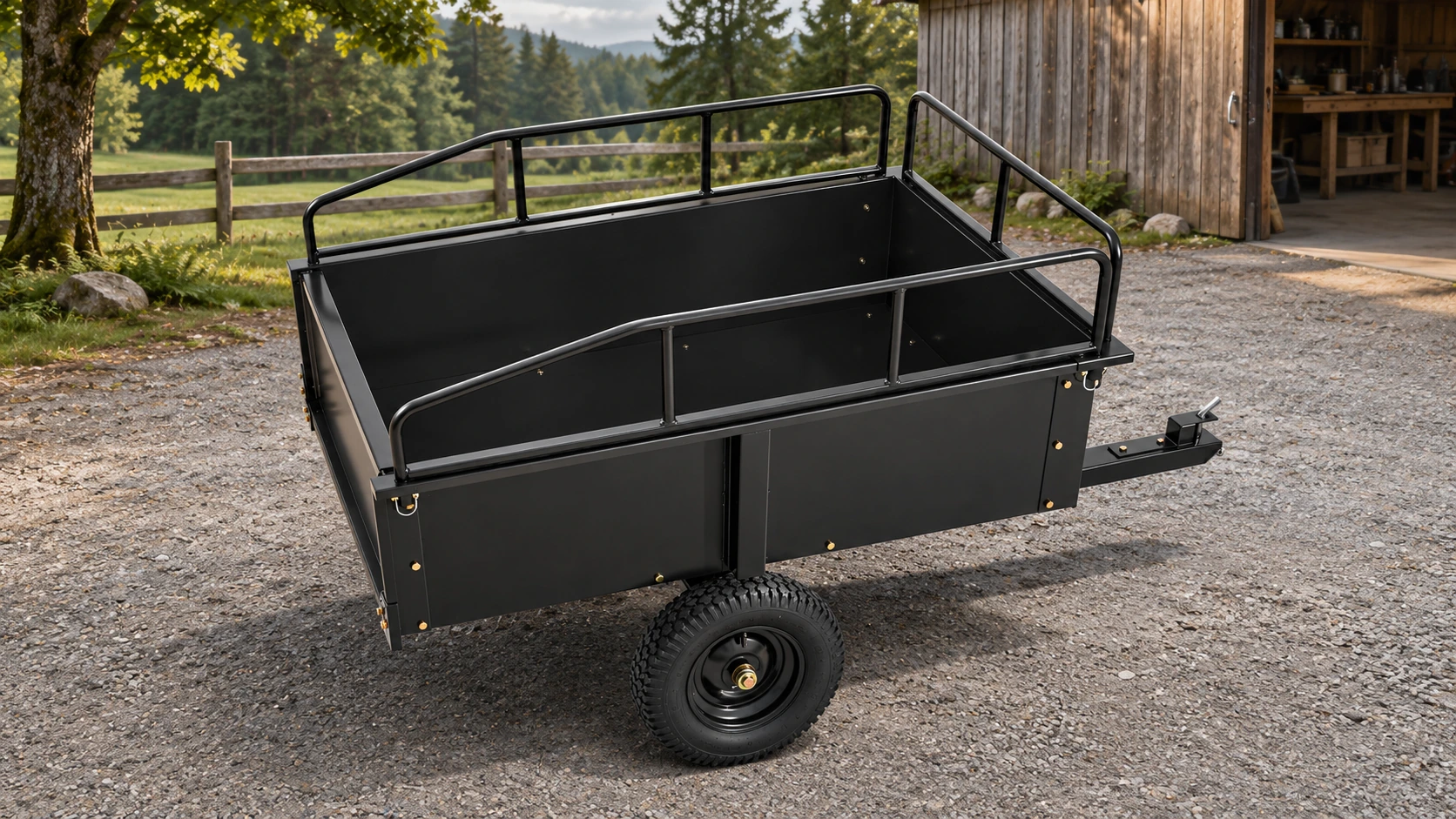
Write down the narrowest access points, typical surfaces, repeated stopping places and available parking space. Add the tools, personal equipment or materials that form part of the intended use. Their dimensions and actual weights are more helpful than a broad phrase such as 'light farm work' or 'weekend adventure'. Passenger requirements should be recorded separately from cargo requirements. This brief helps identify the vehicle format worth discussing without pretending that the format alone guarantees suitability. It also makes trade conversations more efficient: an importer can explain a recurring customer need instead of starting with an unverified model-to-model comparison.
Make room for ownership, not only the first outing
The vehicle also has to fit the practical arrangements around it. Consider transport and storage dimensions, access to local service, the documentation supplied and the parts support you expect from a dealer. If accessories or work equipment are involved, request their compatibility and the vehicle's confirmed limits as part of the same discussion. A clear brief can lead you towards a KRUX ATV conversation or towards a PREDATOR or FARMER UTV conversation. The next step is still the individual model, not an assumption that all ATVs or all UTVs behave alike. Good product information connects a recognisable format with an accurately described configuration. This also keeps a dealer's range presentation consistent.
- Separate seating, cargo and accessory requirements.
- Check drive system and dimensions for each shortlisted model.
- Confirm the configuration, documentation and support in your market.