
Three model names, three actual displacements
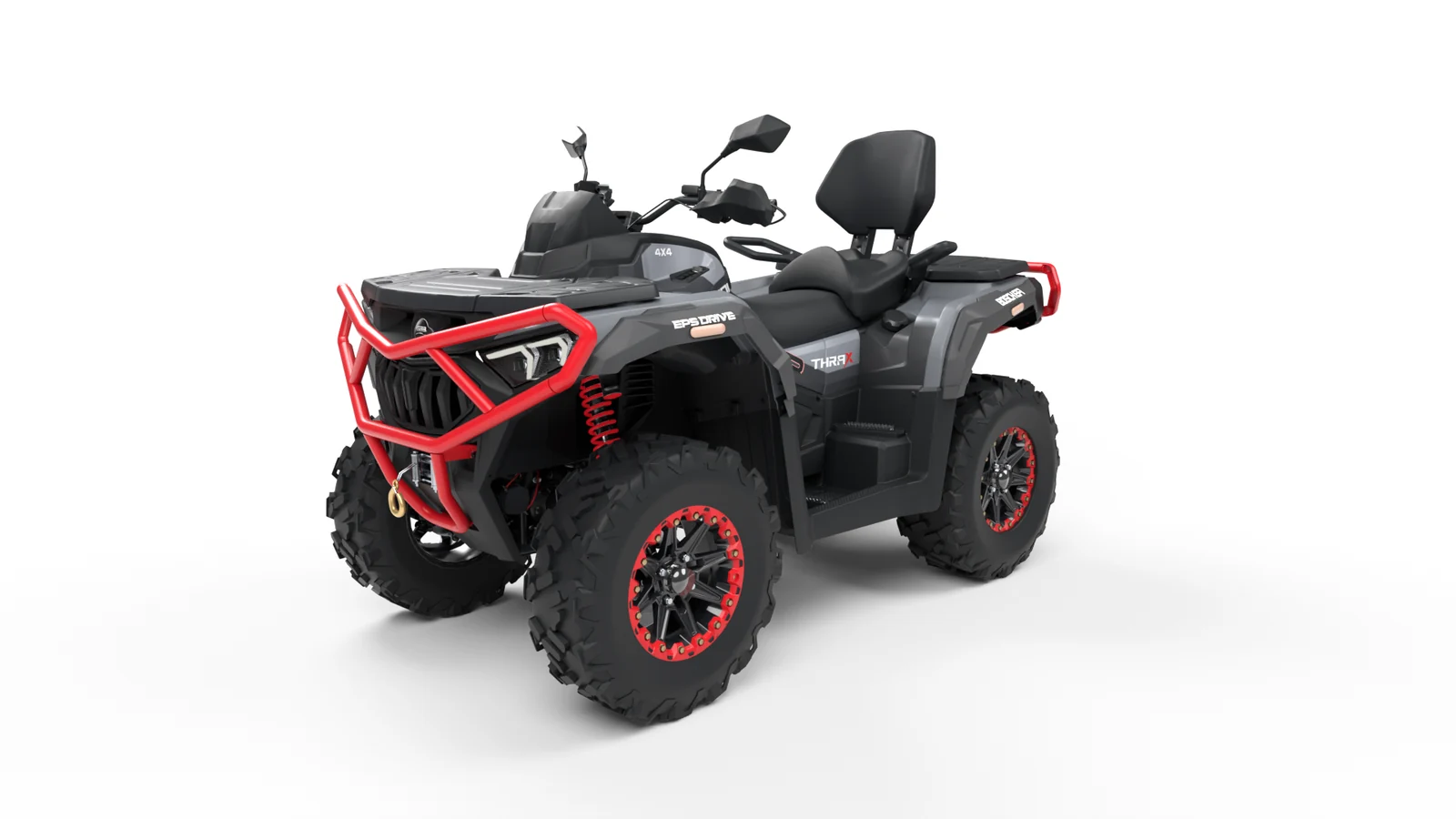
The 580L PRO is listed with a 495 cc liquid-cooled single-cylinder engine. The 680L PRO uses a 580 cc liquid-cooled single-cylinder engine, while the 1000L PRO moves to a 976 cc water-cooled V-twin. In other words, 580L, 680L and 1000L are commercial model designations. Keeping the name and actual displacement in separate columns prevents an easy misunderstanding when comparing a quotation, a product page or a local catalogue. It also makes the engine architecture visible: the move to the 1000L is a change in cylinder layout as well as displacement, rather than simply a larger number on the bodywork.
Compare output with the rest of the specification
The supplied sheets list 40 hp and 44 N·m for the 580L PRO, 46 hp and 51 N·m for the 680L PRO, and 99 hp and 100 N·m for the 1000L PRO. These are useful reference points, not a complete description of how a particular vehicle will feel in your conditions. The 580L and 680L list 20-litre fuel tanks and 290 mm ground clearance; the 1000L lists 25 litres and 300 mm. A larger tank does not establish a longer riding range without comparable consumption data. Likewise, an engine output figure does not establish a carrying or towing rating.
Look at what the three models share
Shared equipment is part of the PRO comparison, not background information to skip. The supplied cards describe BOSCH EFI, CVT transmission, selectable 2WD and 4WD, a front differential lock, EPS and independent double A-arm front and rear suspension. They also describe two-up seating, a passenger backrest and a 7-inch TFT display. All three list a 1,470 mm wheelbase. Against that common foundation, the 1000L sheet specifies adjustable nitrogen shock absorbers, while the 580L and 680L describe adjustable spring and damping arrangements. Use these details to ask more precise questions about the configuration supplied in your destination market.
Turn a comparison into a useful shortlist
A practical shortlist starts with the routes you expect to repeat and the people or equipment involved. Record the available storage space, transport dimensions and local support needs alongside the engine figures. Keep a copy of the parameter sheet for the exact model being discussed, and check that the quotation refers to the same version. Colour choice and appearance can then sit beside the technical comparison rather than obscuring it. If you are sourcing for a dealership, make the model-name versus displacement distinction clear in your own descriptions too. A concise, accurate explanation is more useful to a customer than an unsupported promise of performance.
- Write down the model name and actual displacement separately.
- Compare engine layout, output, dimensions and equipment together.
- Ask for the specification and availability of the market version.