
Fuel delivery and transmission are different questions
BOSCH EFI identifies the electronic fuel-injection system in the supplied PRO cards. CVT identifies the continuously variable transmission. Neither term tells the whole story of the engine, the final drive or the intended application by itself. The cards also list L-H-N-R-P gear positions, so the transmission description has more detail than the three letters CVT alone. When comparing vehicles, keep engine architecture, fuel delivery and transmission in separate lines. This helps you notice when two models share an injection or transmission description but have different displacement, torque or chassis specifications. Any operating procedure still belongs to the instructions supplied with the actual vehicle.
Drive selection and steering assistance do different work
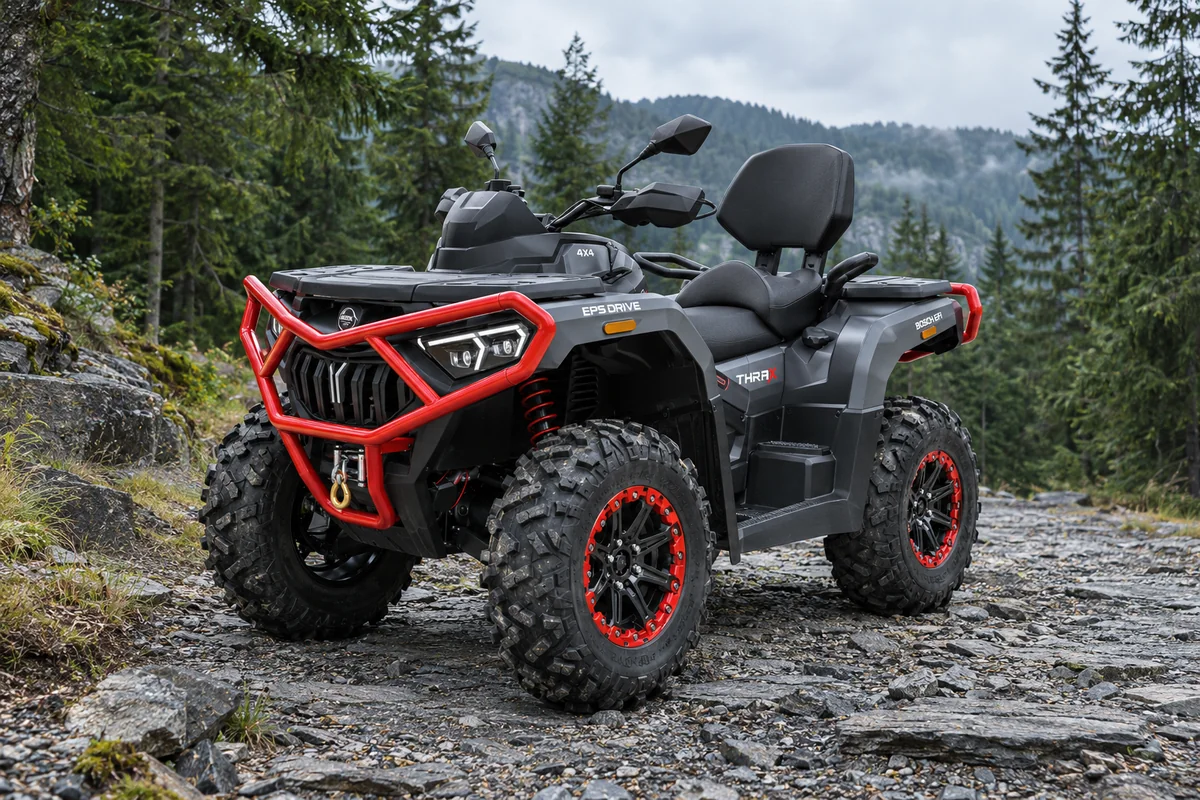
The PRO cards list selectable 2WD and 4WD, a front differential lock and EPS. Drive selection concerns how drive is delivered through the vehicle; the differential-lock entry identifies a separate drivetrain feature. EPS is electric power steering, intended to assist steering effort. It is not a traction system and does not change the vehicle's load limits. These distinctions matter when someone describes a vehicle simply as a '4WD ATV'. A more useful product discussion asks which drive and steering systems are fitted to the specific configuration, how they are described in its documentation and what training or familiarisation is provided with the vehicle.
Separate suspension layout from shock specification
Independent double A-arm front and rear suspension describes the wheel-guiding layout. Springs and dampers are related parts, but their specification is a different line in the comparison. The 580L and 680L PRO cards describe adjustable spring and damping arrangements; the 1000L PRO card specifies adjustable nitrogen shock absorbers. That difference is worth recording without treating the word 'adjustable' as a ready-made setup recommendation. The appropriate settings depend on the delivered vehicle and its instructions. Ground clearance is another separate measurement: the sheets list 290 mm for the 580L and 680L and 300 mm for the 1000L. Clearance alone does not describe suspension travel or traction.
Bring better questions to the product conversation
A specification becomes more useful when it is connected to a real brief. Describe the surface types, repeated journeys, passenger requirements and equipment you expect to discuss. Then ask for the exact model sheet and available market configuration. Do not assume a feature shown on a family photograph is standard on every version, or that a familiar acronym proves a particular outcome. For a distributor, keeping these systems clearly separated also makes sales information easier to maintain. Customers can see which facts are common across a family and which require a model-by-model check, without having to decode an overloaded list of technical names.
- Which features are confirmed for the exact model and market?
- Which details describe layout, and which describe adjustable components?
- Which documentation and local service arrangements accompany the vehicle?